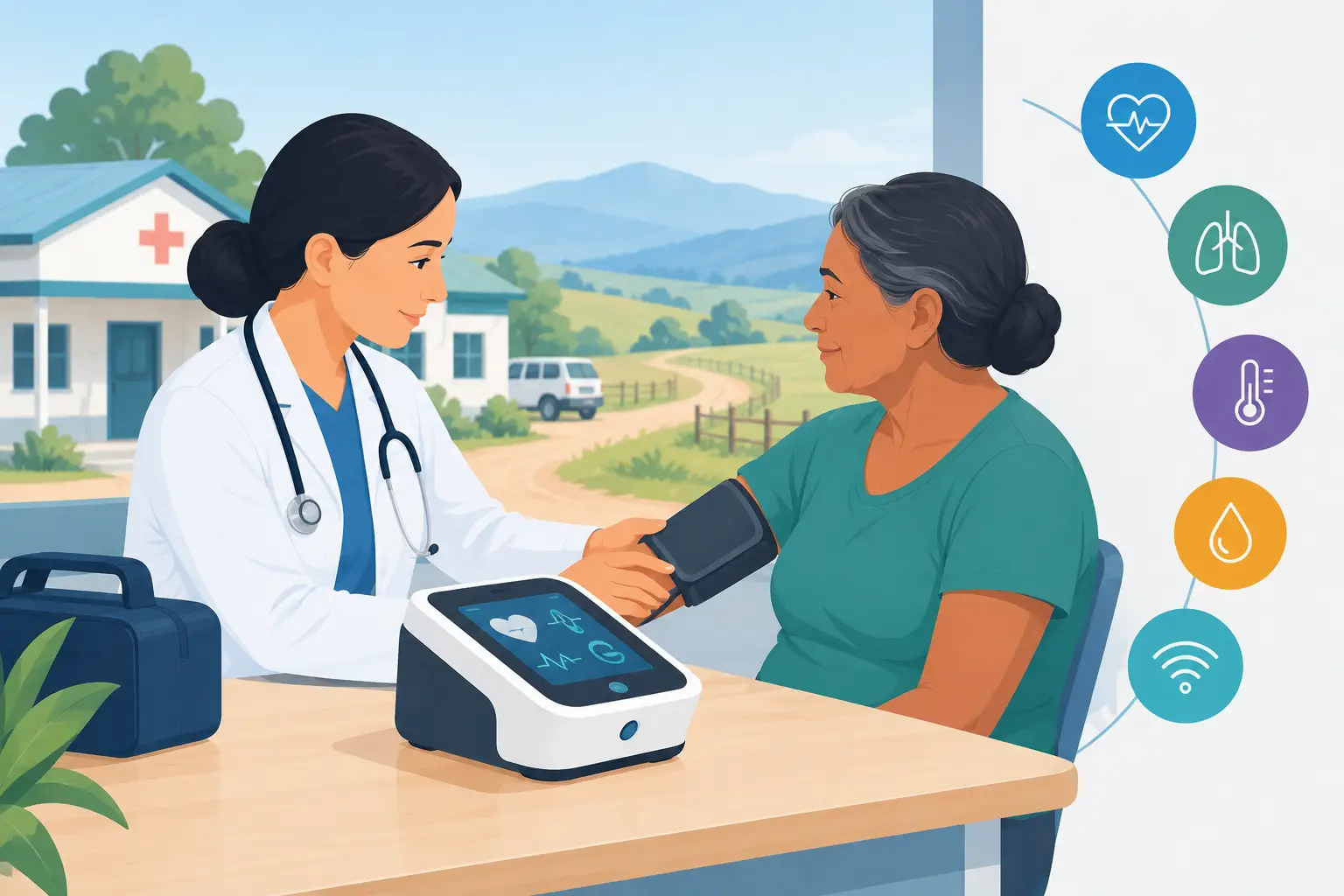
A patient may drive an hour to a rural health clinic because of numbness, fatigue, dizziness, leg pain, or poorly controlled diabetes. Those symptoms can be easy to address one at a time, yet they may also point to vascular, autonomic, or neuropathy-related concerns that deserve a more complete assessment. The right medical device for rural health clinics helps providers gather meaningful clinical insight during the visit, rather than relying on delayed referrals, fragmented testing, or a wait-and-see approach.
For rural health clinics, the challenge is not simply adding technology. It is finding diagnostic capability that supports earlier identification of potential risk while respecting the realities of staffing, scheduling, patient access, and reimbursement. A useful system must be clinically relevant, practical for trained staff to operate, and able to contribute clear information to the provider's decision-making process.
Why Rural Clinics Need More Complete Assessment
Rural communities often carry a significant burden of chronic disease. Diabetes, hypertension, obesity, cardiovascular risk, chronic pain, and limited access to specialty care can create a setting where early changes in circulation, nerve function, or autonomic function go undetected. Patients may postpone follow-up because travel is difficult, work schedules are inflexible, or specialty appointments are not readily available.
Primary care teams are often responsible for managing complex patients across many conditions. A clinician may recognize that a patient is at higher risk but lack efficient access to the information needed to assess that risk more comprehensively during a standard visit. Sending patients elsewhere for multiple tests can create delays, incomplete follow-through, and a less connected patient experience.
This is where integrated diagnostic assessment can have real value. Instead of treating each concern as a separate workflow, rural clinics can consider technology that brings several clinically relevant assessments together. The goal is not to replace clinical judgment or specialty referral. It is to give the care team more actionable information earlier, when it can better guide next steps.
What to Look for in a Medical Device for Rural Health Clinics
A diagnostic platform should solve a clinical and operational problem at the same time. Devices that require extensive setup, specialized staffing, long testing windows, or complex interpretation may be difficult to sustain in a busy rural setting, even when the underlying technology is valuable.
The strongest fit is usually a noninvasive system that can be administered by trained staff, produces usable information within the patient visit, and gives providers an interpretive report that supports clinical review. The report should organize findings clearly enough to help the team recognize potential abnormalities, discuss results with patients, document the encounter appropriately, and determine whether monitoring, treatment changes, additional testing, or referral may be appropriate.
Clinics should also assess whether a platform evaluates concerns that commonly overlap in their patient population. For patients with diabetes, metabolic syndrome, hypertension, circulation complaints, numbness, chronic pain, dizziness, fatigue, or a family history of cardiovascular disease, isolated measurements may not tell the full story. A broader assessment may be more useful when it evaluates multiple related systems in one encounter.
A Practical Example: VitalScan
VitalScan is an FDA 510(k)-cleared, noninvasive diagnostic platform designed to help providers assess potential cardiovascular, autonomic, vascular, and neuropathy-related abnormalities in approximately 15 minutes. It combines several assessments into one streamlined workflow, helping rural health clinics add a more comprehensive layer of patient evaluation without fundamentally redesigning how the practice operates.
The platform can evaluate autonomic nervous system function, heart rate variability, sudomotor function associated with neuropathy assessment, vascular and circulation measures, ankle-brachial index, peripheral arterial disease indicators, pulse-wave analysis, toe-brachial index, and ECG-related information. Rather than requiring the care team to piece together findings from separate systems, it provides an immediate interpretive report for provider review.
That combination matters because chronic disease rarely stays confined to one category. A patient with longstanding diabetes and leg discomfort may have concerns related to both nerve function and circulation. A patient reporting fatigue or dizziness may benefit from assessment that considers autonomic function alongside cardiovascular indicators. Comprehensive testing does not establish a diagnosis by itself, but it can help clinicians identify patterns that warrant closer attention.
Bringing Testing Into the Existing Visit
The best diagnostic addition is one that fits into the clinic day. In many rural health clinics, the workflow can be organized around staff-led testing before or after the provider encounter. Because the assessment is noninvasive and can be completed by trained personnel in about 15 minutes, it may be scheduled alongside chronic care follow-ups, annual wellness visits, diabetes management appointments, or cardiovascular risk evaluations.
Implementation should begin with patient selection rather than testing everyone indiscriminately. Clinics may prioritize patients with diabetes, hypertension, obesity, metabolic syndrome, known cardiovascular risk, numbness or tingling, foot concerns, leg pain, dizziness, fatigue, chronic pain, or circulation complaints. Patients with a relevant family history may also be candidates when the provider determines testing is clinically appropriate.
A sustainable program typically depends on four operational decisions:
- Define the patient populations and visit types where testing may provide the most value.
- Train designated staff members on patient preparation, test administration, and workflow handoff.
- Establish a provider review process for interpretive reports and follow-up decisions.
- Review documentation, coding, coverage, and payer requirements before building financial expectations.
These steps are straightforward, but they should not be skipped. A device generates value only when results are consistently reviewed and connected to patient care. Clinics should build protocols that clarify when an abnormal or concerning result leads to repeat assessment, medication review, lifestyle counseling, further diagnostic workup, specialist consultation, or urgent escalation.
Clinical Value Beyond a Single Data Point
For providers, the advantage of integrated testing is context. Blood pressure, A1C, lipid values, symptoms, physical examination findings, and patient history remain essential. A more comprehensive physiologic assessment can add another layer of evidence when the clinical picture is unclear or risk may be developing before overt complications appear.
It can also strengthen patient engagement. Many patients understand their chronic condition in broad terms but do not connect high glucose, high blood pressure, smoking history, or inactivity with changes in nerve health and circulation. When a provider can review a clear report during the visit, the conversation becomes more concrete. Patients may better understand why foot care, medication adherence, activity, nutrition, and follow-up matter.
There are trade-offs to consider. Not every patient needs every test, and not every flagged finding requires immediate intervention. Providers must interpret results in the context of symptoms, medical history, physical examination, and accepted clinical standards. Clinics also need realistic expectations about staff capacity, payer coverage, and the time required to establish a new service line. Technology should support sound medicine, not create testing for its own sake.
The Operational and Financial Case
Rural health clinics are asked to improve quality while managing constrained resources. A thoughtfully implemented diagnostic service can support both objectives. Earlier identification of potential risk may help close care gaps, support chronic disease management, and create more informed follow-up plans. Immediate reports can reduce the friction of waiting for separate appointments or outside results before deciding what to do next.
There may also be an opportunity to add reimbursable diagnostic services when testing is medically necessary, properly documented, coded correctly, and covered by the relevant payer. Reimbursement is never guaranteed, and payment rules vary by payer, geography, provider type, and setting. Clinics should conduct a payer-specific review and develop a realistic ROI model that accounts for patient volume, staffing, training, utilization, documentation, and expected collection rates.
The more durable business case is not simply a new billing opportunity. It is the ability to offer a higher level of assessment to patients who may otherwise face long travel times or delayed specialty access. When the service is clinically aligned and operationally disciplined, it can help a rural clinic become a stronger local resource for preventive and chronic care.
A Better Starting Point for Earlier Action
Rural health clinics do not need technology that adds complexity without adding clarity. They need tools that help their teams assess relevant risks efficiently, communicate findings clearly, and make better-informed decisions for patients who may not have easy access to additional care.
A demonstration and customized ROI discussion can help clinic leaders see how a comprehensive diagnostic platform would fit their patient population, staffing model, and care goals. The most useful next step is to evaluate the workflow with real patient scenarios, confirm the clinical and reimbursement considerations that apply to the organization, and determine whether earlier, more complete assessment can help the clinic act before risk becomes a crisis.