Objective autonomic & vascular data for every cardiology patient.
Quantify arterial stiffness with PWV, assess endothelial dysfunction, and detect Cardiac Autonomic Neuropathy (CAN) before clinical signs appear — all in a 15-minute in-office assessment.
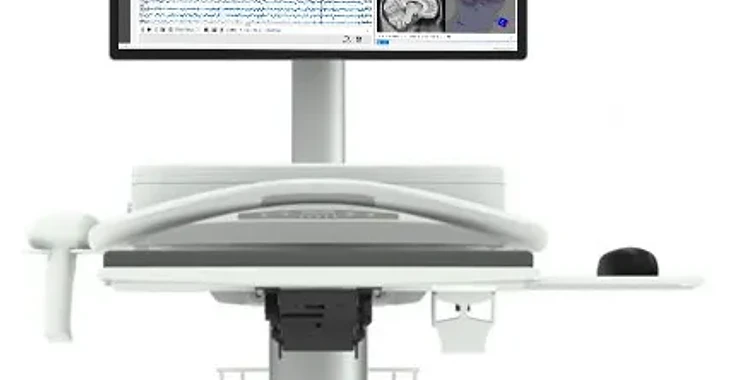
What VitalScan helps you identify.
Cardiac Autonomic Neuropathy
CAN affects up to 50% of diabetic patients and is a strong predictor of mortality. Detect it early with standardized ANS testing.
Arterial Stiffness
Pulse Wave Velocity (PWV) provides objective measurement of arterial compliance — a key cardiovascular risk marker.
Sudden Death Risk
Post-MI patients with autonomic dysfunction have significantly higher mortality. ANS testing identifies at-risk patients.
Heart Failure Monitoring
Track autonomic balance changes over time to monitor treatment efficacy in heart failure patients.
Cardiology and autonomic testing.
Autonomic Testing in Cardiovascular Care
Cardiac autonomic neuropathy (CAN) is one of the most underdiagnosed complications in cardiology, affecting up to 50% of patients with diabetes and significantly increasing the risk of arrhythmias, silent ischemia, and sudden cardiac death. The American Diabetes Association and the American Heart Association both recognize autonomic nervous system testing as an important diagnostic tool for identifying cardiovascular risk before clinical symptoms manifest. VitalScan ANS+ provides cardiology practices with standardized, reproducible testing protocols for cardiovagal function, vasomotor adrenergic response, and sudomotor assessment — all completed in approximately 15 minutes during a standard office visit.
Reimbursement and Workflow Integration
Autonomic nervous system function testing is reimbursed under CPT codes 95921 (cardiovagal innervation) and 95922 (vasomotor adrenergic innervation), with most major insurers covering the assessment when medical necessity is documented. Vascular studies including ABI (93922) and duplex venous scans (93971) complement the autonomic assessment to provide a comprehensive cardiovascular profile. The VitalScan ANS+ system generates automated interpretive reports immediately after testing, allowing cardiologists to review results with patients during the same visit and integrate findings into their cardiovascular risk management plans without extending appointment times.
Serving cardiology practices across the United States
US MedResources equips cardiology practices nationwide with FDA-cleared autonomic and vascular diagnostic technology. From New York to Los Angeles, Chicago to Miami, practices rely on VitalScan ANS+ for early detection of cardiology conditions — with CPT-billable testing that fits into a single patient visit.
Request an ROI & QuoteBillable under standard CPT codes.
95921Cardiovagal innervation: heart rate response to deep breathing, Valsalva ratio, and 30:15 ratio — core parasympathetic assessment for CAN detection95922Vasomotor adrenergic function: beat-to-beat blood pressure and heart rate response to tilt/standing and Valsalva — identifies orthostatic dysfunction and adrenergic failure93971Duplex scan of extremity veins, unilateral or limited — for venous insufficiency and DVT assessment in cardiology patients93922Limited bilateral noninvasive physiological arterial study of lower extremities (ABI) — PAD screening for cardiovascular risk stratificationWhat it adds to your practice.
Estimated monthly revenue
3 tests/day × ~$200 avg = $12,000/month
Based on 3 tests per day, 20 working days per month. Actual reimbursement varies by payer and region.
Model your own patient mix.
Adjust the tests you'd run per day and your expected reimbursement for each test type. Your estimated revenue, payback period, and return on investment update instantly.
ANS Comprehensive
CPT 95924
Daily
$600
Sudomotor Function
CPT 95923
Daily
$180
Vascular (ABI / Arterial)
CPT 93922–93924
Daily
$150
Venous Doppler
CPT 93971
Daily
$200
Daily gross revenue
$1,130
5 tests / day
Annual gross reimbursement
$293,800
5 days × 52 weeks
Payback period
2 mo
ROI ratio
6.5X
This mix pays back your $45,000 investment in about 2 months.
Illustrative model based on $45,000 promotional equipment investment and the inputs you choose. Actual reimbursement depends on medical necessity, documentation, payer policy, contracted rates, and claim adjudication. Figures are not a guarantee of reimbursement.
Cardiology autonomic testing, answered.
What CPT codes does VitalScan ANS+ bill under for cardiology?
Cardiology practices bill autonomic testing under CPT 95921 (cardiovagal innervation) and 95922 (vasomotor adrenergic innervation), with vascular studies under 93922 (ABI) and 93971 (venous duplex). When cardiovagal, vasomotor, and sudomotor testing are performed together, CPT 95924 covers the combined assessment.
How does VitalScan detect Cardiac Autonomic Neuropathy?
VitalScan measures heart rate variability during paced deep breathing, the Valsalva ratio, and the 30:15 orthostatic ratio — the three standardized cardiovagal function tests recommended for CAN diagnosis. Results are compared against age-adjusted normative values to identify parasympathetic dysfunction early, before clinical symptoms like resting tachycardia or orthostatic hypotension develop.
How long does autonomic testing take in a cardiology visit?
A complete VitalScan ANS+ assessment — including cardiovagal, vasomotor, sudomotor, and vascular testing — takes approximately 15 minutes. Testing is non-invasive, requires no patient preparation, and can be performed by standard clinical staff, allowing it to fit into routine cardiology office visits without extending appointment times.
Conditions we test for
Ready for your Cardiology ROI analysis?
Get a personalized growth plan with clinical workflow, CPT billing guidance, and financing options — including Section 179 and grant pathways.