Diabetes standard of care, automated.
ANS testing is a recommended standard of care by the American Diabetes Association for patients with Type 1 and Type 2 diabetes — screen for CAN and DAN early.
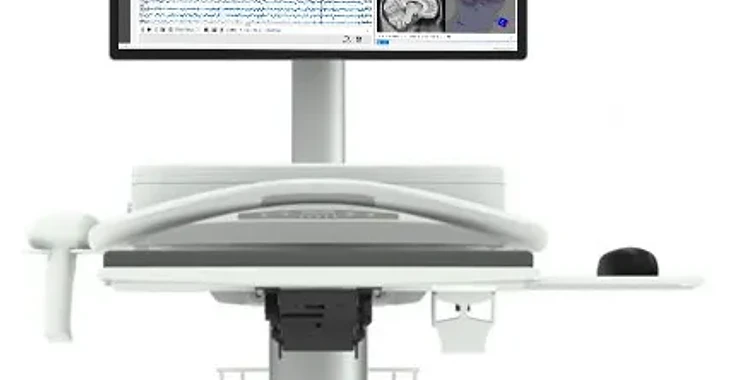
What VitalScan helps you identify.
Diabetic Autonomic Neuropathy
DAN is a common complication of diabetes. The ADA recommends ANS testing for all diabetic patients — VitalScan makes it automated and reproducible.
Cardiac Autonomic Neuropathy
CAN is a serious complication that increases mortality risk. Early detection enables timely intervention.
Metabolic Syndrome
Autonomic imbalance is a key feature of metabolic syndrome. ANS testing provides objective markers for monitoring.
Progression Tracking
Serial ANS testing tracks disease progression and treatment efficacy over time.
Endocrinology and autonomic testing.
ADA-Recommended Standard of Care for Diabetes
The American Diabetes Association (ADA) Standards of Care recommend that all patients with Type 2 diabetes be screened for autonomic neuropathy at diagnosis, and Type 1 patients beginning five years post-diagnosis, with annual follow-up thereafter. Despite this recommendation, fewer than 10% of eligible diabetic patients receive autonomic testing in routine clinical practice — largely due to the complexity and time requirements of traditional testing equipment. VitalScan ANS+ addresses this gap by automating the complete autonomic assessment battery in approximately 15 minutes, making ADA-recommended screening practical for endocrinology practices of any size.
Comprehensive Assessment and Reimbursement
Cardiac autonomic neuropathy (CAN) is the most clinically significant manifestation of diabetic autonomic neuropathy, independently predicting cardiovascular mortality, arrhythmias, and silent ischemia. Combined autonomic testing under CPT 95924 covers cardiovagal (95921), vasomotor adrenergic (95922), and sudomotor (95923) testing performed together, providing the most comprehensive and most reimbursed single code for autonomic assessment. When vascular screening (93922) is added, endocrinology practices can generate a complete cardiovascular risk profile for their diabetic patients — supporting both clinical decision-making and the documentation requirements for performance-based quality measures.
Serving endocrinology practices across the United States
US MedResources equips endocrinology practices nationwide with FDA-cleared autonomic and vascular diagnostic technology. From New York to Los Angeles, Chicago to Miami, practices rely on VitalScan ANS+ for early detection of endocrinology conditions — with CPT-billable testing that fits into a single patient visit.
Request an ROI & QuoteBillable under standard CPT codes.
95924Combined autonomic testing: cardiovagal (95921), vasomotor adrenergic (95922), and sudomotor (95923) performed together — the most comprehensive code for diabetic autonomic neuropathy assessment95921Cardiovagal innervation testing — for early CAN detection and cardiovascular mortality risk stratification in diabetic patients93922Limited bilateral ABI study of lower extremities — vascular screening for diabetes-related peripheral arterial diseaseWhat it adds to your practice.
Estimated monthly revenue
3 tests/day × ~$200 avg = $12,000/month
Based on 3 tests per day, 20 working days per month. Actual reimbursement varies by payer and region.
Model your own patient mix.
Adjust the tests you'd run per day and your expected reimbursement for each test type. Your estimated revenue, payback period, and return on investment update instantly.
ANS Comprehensive
CPT 95924
Daily
$600
Sudomotor Function
CPT 95923
Daily
$180
Vascular (ABI / Arterial)
CPT 93922–93924
Daily
$150
Venous Doppler
CPT 93971
Daily
$200
Daily gross revenue
$1,130
5 tests / day
Annual gross reimbursement
$293,800
5 days × 52 weeks
Payback period
2 mo
ROI ratio
6.5X
This mix pays back your $45,000 investment in about 2 months.
Illustrative model based on $45,000 promotional equipment investment and the inputs you choose. Actual reimbursement depends on medical necessity, documentation, payer policy, contracted rates, and claim adjudication. Figures are not a guarantee of reimbursement.
Endocrinology autonomic testing, answered.
Does the ADA recommend autonomic testing for all diabetic patients?
Yes. The ADA Standards of Care recommend screening for autonomic neuropathy at diagnosis for Type 2 diabetes and beginning five years post-diagnosis for Type 1 diabetes, with annual follow-up. Despite this, autonomic testing remains underutilized due to equipment complexity and time constraints — VitalScan ANS+ addresses both barriers with a 15-minute automated assessment.
What is the difference between CPT 95921, 95923, and 95924?
CPT 95921 covers cardiovagal (parasympathetic) testing, 95923 covers sudomotor function, and 95924 is the combined code used when cardiovagal (95921), vasomotor adrenergic (95922), and sudomotor (95923) testing are all performed together. CPT 95924 provides the most comprehensive assessment and the highest reimbursement for diabetic autonomic neuropathy evaluation.
How does autonomic testing improve diabetes management?
Early detection of cardiac autonomic neuropathy enables endocrinologists to intensify glycemic control, initiate cardioprotective therapy (ACE inhibitors, ARBs, SGLT2 inhibitors, GLP-1 receptor agonists), and refer for cardiology evaluation before irreversible cardiovascular damage occurs. Serial testing also provides objective data on whether interventions are slowing disease progression.
Conditions we test for
Ready for your Endocrinology ROI analysis?
Get a personalized growth plan with clinical workflow, CPT billing guidance, and financing options — including Section 179 and grant pathways.