Catch peripheral neuropathy earlier than symptoms.
SudoCheck focuses on small nerve fibers within the autonomic nervous system and their ability to regenerate — detect peripheral neuropathy before it compromises the foot.
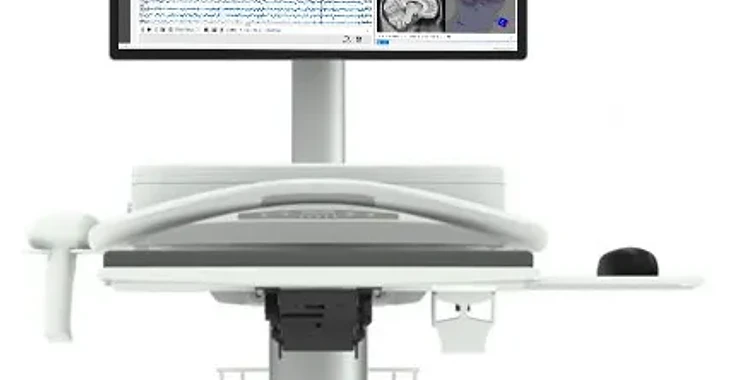
What VitalScan helps you identify.
Diabetic Neuropathy
ANS testing detects sudomotor dysfunction — an early marker of diabetic peripheral neuropathy, before clinical symptoms.
Sudomotor Dysfunction
SudoCheck assesses small nerve fiber function and sweat response — providing objective data on autonomic nerve damage.
PAD / ABI Screening
Vascular studies identify Peripheral Artery Disease and ankle-brachial index abnormalities in at-risk patients.
Small Fiber Neuropathy
Detect small fiber neuropathy before it progresses to foot complications or ulceration.
Podiatry and autonomic testing.
Early Detection in Podiatric Diabetic Care
Diabetic peripheral neuropathy is the leading cause of non-traumatic foot amputation in the United States, yet standard monofilament testing detects only late-stage sensory loss. Sudomotor dysfunction — the earliest measurable sign of small nerve fiber damage — can be identified years before clinical symptoms appear using electrochemical skin conductance testing (CPT 95923). The American Diabetes Association recommends annual screening for all diabetic patients, and podiatry practices are uniquely positioned to provide this testing during routine foot exams. VitalScan ANS+ with SudoCheck enables podiatrists to identify at-risk patients and intervene before ulceration or tissue loss occurs.
Vascular Screening and Reimbursement
Peripheral artery disease (PAD) is present in up to 30% of diabetic patients over 50 and significantly increases the risk of foot complications and amputation. The ankle-brachial index (ABI), billed under CPT 93922, is the gold-standard non-invasive screening test recommended by the American Heart Association for all diabetic patients over 50. VitalScan ANS+ combines sudomotor function testing (95923) with bilateral lower extremity arterial studies (93922 and 93923) to give podiatrists a complete vascular and neurological risk profile in a single visit, generating automated reports that support both clinical decision-making and insurance documentation.
Serving podiatry practices across the United States
US MedResources equips podiatry practices nationwide with FDA-cleared autonomic and vascular diagnostic technology. From New York to Los Angeles, Chicago to Miami, practices rely on VitalScan ANS+ for early detection of podiatry conditions — with CPT-billable testing that fits into a single patient visit.
Request an ROI & QuoteBillable under standard CPT codes.
95923Sudomotor function testing: QSART, sympathetic skin response, or electrochemical skin conductance — the primary code for small fiber neuropathy assessment in podiatric patients93922Limited bilateral noninvasive physiological arterial study of lower extremities (ABI) — essential PAD screening for diabetic and at-risk foot patients93923Complete bilateral noninvasive physiological arterial study of lower extremities — comprehensive arterial perfusion assessment for wound risk stratification95921Cardiovagal innervation testing — adjunctive autonomic assessment for comprehensive diabetic neuropathy screeningWhat it adds to your practice.
Estimated monthly revenue
3 tests/day × ~$180 avg = $10,800/month
Based on 3 tests per day, 20 working days per month. Actual reimbursement varies by payer and region.
Model your own patient mix.
Adjust the tests you'd run per day and your expected reimbursement for each test type. Your estimated revenue, payback period, and return on investment update instantly.
ANS Comprehensive
CPT 95924
Daily
$600
Sudomotor Function
CPT 95923
Daily
$180
Vascular (ABI / Arterial)
CPT 93922–93924
Daily
$150
Venous Doppler
CPT 93971
Daily
$200
Daily gross revenue
$1,130
5 tests / day
Annual gross reimbursement
$293,800
5 days × 52 weeks
Payback period
2 mo
ROI ratio
6.5X
This mix pays back your $45,000 investment in about 2 months.
Illustrative model based on $45,000 promotional equipment investment and the inputs you choose. Actual reimbursement depends on medical necessity, documentation, payer policy, contracted rates, and claim adjudication. Figures are not a guarantee of reimbursement.
Podiatry autonomic testing, answered.
What CPT codes does VitalScan bill under for podiatry?
Podiatry practices primarily bill sudomotor function testing under CPT 95923, which covers QSART, sympathetic skin response, and electrochemical skin conductance. Vascular screening is billed under 93922 (limited bilateral ABI) or 93923 (complete bilateral lower extremity arterial study). Adjunctive autonomic testing under 95921 may also be used for comprehensive diabetic neuropathy assessment.
How does SudoCheck detect small fiber neuropathy?
SudoCheck uses electrochemical skin conductance to measure the function of small sympathetic nerve fibers (C-fibers) that innervate sweat glands in the hands and feet. These fibers are among the earliest to be damaged by diabetes, often before large fiber involvement is detectable. Reduced conductance indicates sudomotor dysfunction, providing an early objective marker for small fiber neuropathy.
Is autonomic and vascular testing covered by insurance for podiatric patients?
Yes. CPT 95923 (sudomotor function testing), 93922 (ABI), and 93923 (complete lower extremity arterial study) are covered by most major insurers when medical necessity is documented — typically for diabetic patients, patients with suspected PAD, or those with risk factors for foot complications. Coverage criteria and reimbursement rates vary by payer and region.
Conditions we test for
Ready for your Podiatry ROI analysis?
Get a personalized growth plan with clinical workflow, CPT billing guidance, and financing options — including Section 179 and grant pathways.